


April 2021 – When assessing pain in a nonverbal or cognitively compromised patient, consider symptoms of agitation and fear as clues.
Consider Mrs. Jones: She is getting more agitated with her transfers, strikes out at staff attempting to provide bed care, and repeatedly yells “no” when attempting to console her.
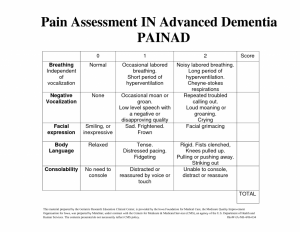
Negative vocalization, grimacing facial expression, tense body language, and inconsolability are often indicators of pain in a patient not otherwise able to express themselves. Paying attention to these clues can provide respectful and comfort-focused care in advanced illnesses.
Choosing a pain-relieving medicine rather than an antipsychotic can lead to better pain relief AND better behavior.
We use the PAINAD – Pain assessment in advanced dementia scale to assess pain in nonverbal patients. It provides a 10 point pain scale based on several minutes of observation. Click here to access the PAINAD in PDF format.
https://pubmed.ncbi.nlm.nih.gov/12807591/
For more information contact Dr. Leslie Estep or Dr. Anita Meyer at Hospice of the Northwest, 360-814-5550, or [email protected] or [email protected]