
Palliative Pearls

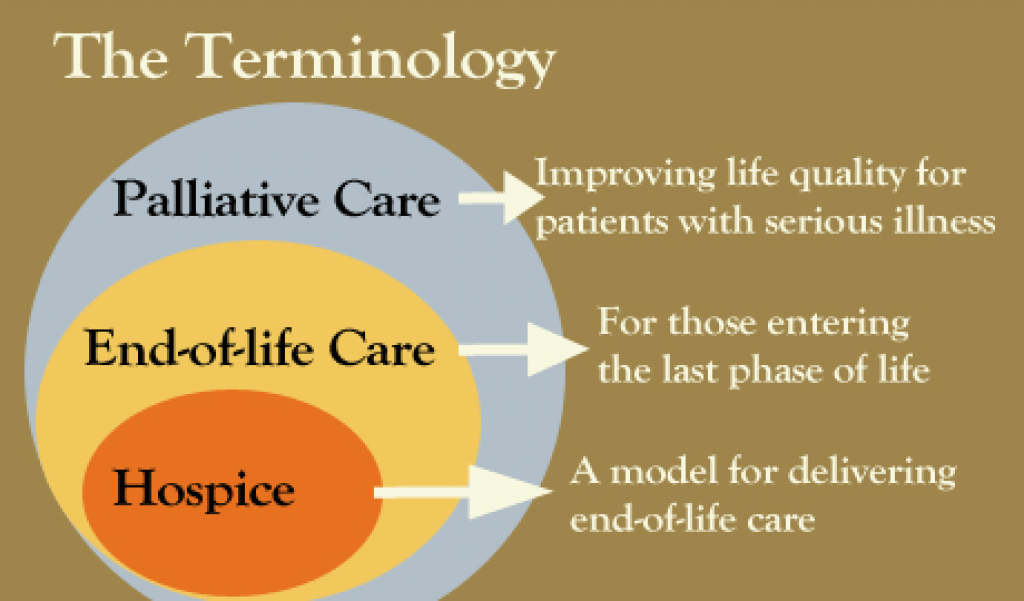
What is the difference between Palliative Care and Hospice?

What is the difference between Palliative Care and Hospice?

September 2018 - A picture speaks a thousand words. (see above) All hospice is palliative care; not all palliative care is end-of-life or hospice care. For more information contact Dr. Leslie Estep or Dr. Anita Meyer at Hospice of the Northwest, 360-814-5550, or...

read more
Delivering Difficult News

Delivering Difficult News

August 2018 - Providing serious medical information is challenging. Below are helpful steps and phases. 1. Use simple language. “I wish I had better news, but the biopsy showed cancer.” “I’m afraid you have had a miscarriage.” 2. Listen, use silence, and acknowledge...

read more
Supplements: Less is More at End-of-Life

Supplements: Less is More at End-of-Life

July 2018 - De-escalating supplements can improve quality of life. Patients referred to hospice are often on multiple supplements. They are relieved when some pills can be stopped. Consider discontinuing the following supplements in your palliative patients: Calcium...

read more
Fall Risk Screen

Fall Risk Screen

June 2018 -  Falls are the number one cause of death from injury in patients over 65. A simple fall risk screen for elders developed by the CDC includes the following three questions: 1. Have you fallen in the past year? 2. Do you feel unsteady when standing or...

read more
The CPR Discussion – Part III

The CPR Discussion – Part III

May 2018 - Make a recommendation. You can reduce your patient’s and family’s distress by making a recommendation about CPR based on what you know about CPR as a medical procedure. “Do everything, doctor!” may not mean full code. Patients may be expressing fear; they...

read more
The CPR Discussion – Part II

The CPR Discussion – Part II

April 2018 - A patient’s past experience with CPR or intensive care is important. Before trying to complete a POLST, learn about your patient’s experience. Personal experience is more important to many patients than statistics. To find out what they’re thinking, try...

read more
The CPR Discussion – Part I

The CPR Discussion – Part I

March 2018 - Use facts not fear to help your patients make a CPR decision. - CPR on TV looks easy and seems to be very successful; unfortunately, in real life, only 1 in 8 patients survive witnessed arrest. Many of the survivors have a reduced functional capacity...

read more
Comfort Medications Toolkit

Comfort Medications Toolkit

February 2018 - For patients unable or unwilling to come onto hospice quickly, here is a basic toolkit of medications for typical end-of-life symptoms. Even patients who can no longer swallow can use concentrated sublingual medications.  We generally provide an...

read more
“Good Enough” Prognostication

“Good Enough” Prognostication

January 2018 - The point of prognostication is not to be right, but to help people prepare. Avoid the trap of exact numbers. Develop a prognosis that is good enough to allow for important decisions to be made around advanced planning, therapeutic interventions, and...

read more
Anticoagulation in Frail Patients

Anticoagulation in Frail Patients

December 2017 - The risk of intracranial or GI hemorrhage in a debilitated ambulatory patient at risk for falling likely exceeds the benefit of stroke reduction.* Most experts agree that anticoagulation should not be used in these cases - Patient has a high risk of...

read more
This field is for validation purposes and should be left unchanged.

We Are Ready to Help

Call the Referral Center at (360) 814-5550 or fill out form below and we'll contact you.